


Beyond simple SEO optimization, address natural-language voice queries.
For example, change your short-tail keywords to long-tail, conversational phrases that mimic how people speak to smart speakers (e.g., “What is the pizza place near me with indoor seating?
You probably know that SEO Mobile Search Success is critical. But mobile behavior is changing.
People aren’t just typing on phones; they are talking to them, and to Alexa and Google Home.
Voice search isn’t coming; it’s here, and voice search requires a different approach to keywords.
The Differences Between Keyboard-Typed and Spoken Search
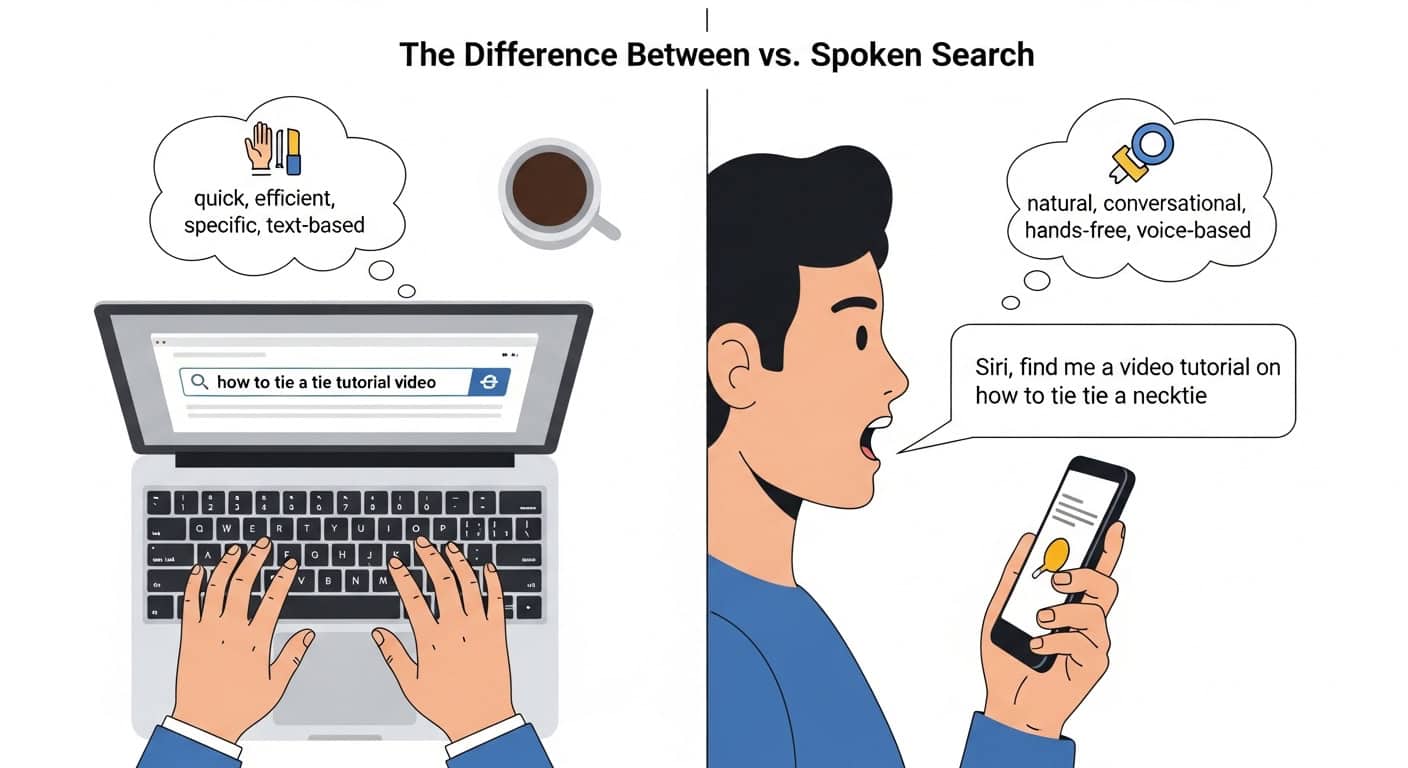
The new search models have shifted away from “robot language” (e.g., “roofers in Virginia Beach”) to natural language (e.g., “What are some of the best-rated roofers near me that offer reasonable prices for a new roof?”).
TIP: Local SEO Focus: Many voice queries are local (“near me”). Keep your Google Business Profile up to date, consistent, and detailed with services, hours, and location.
- Read: How to Talk to Google: A Conversation WITH Algorithms, noting that the “conversation” is now literal.
Targeting Long-Tail, Conversational Keywords
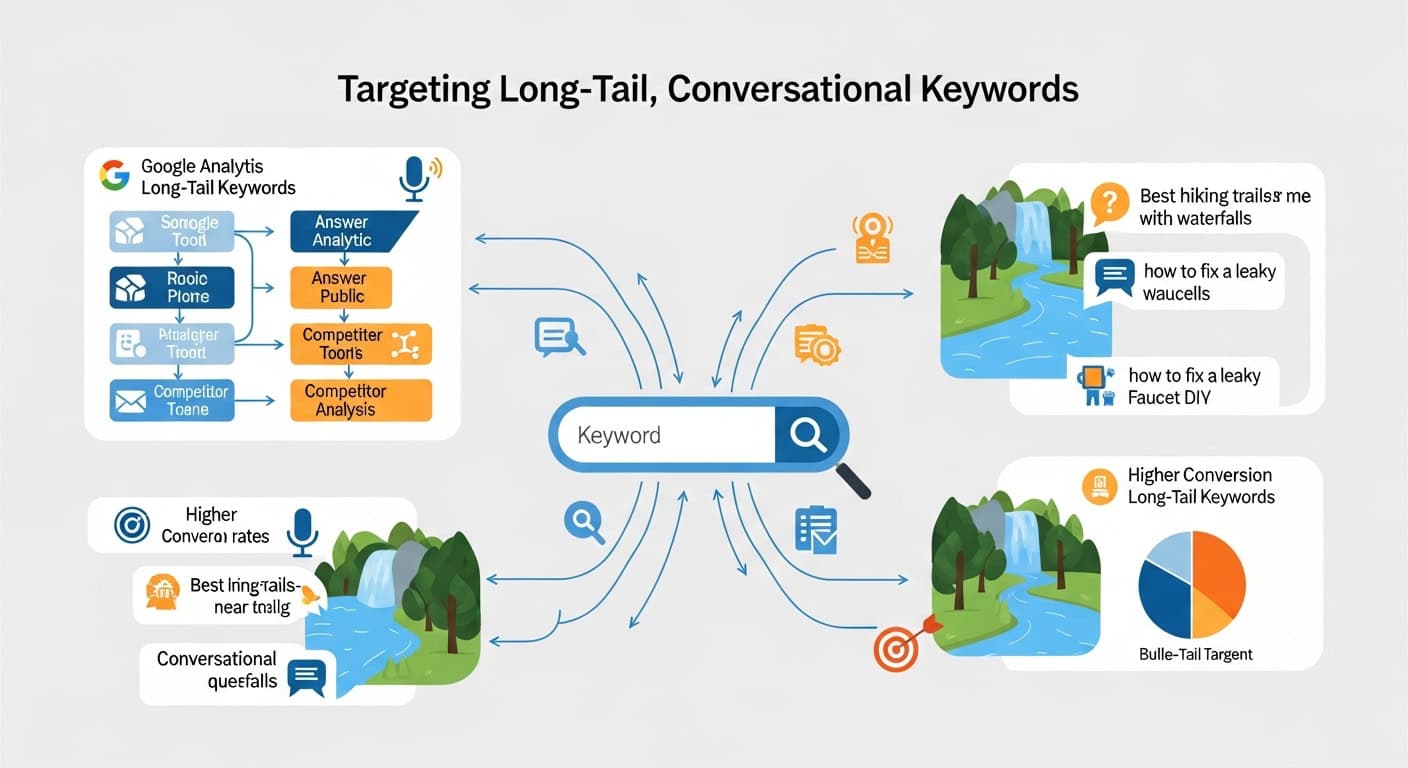
Voice searches are longer, more specific, and often phrased as questions.
- Read: Use data from Ahrefs on keyword research for voice: Ahrefs guide to long-tail keywords and voice search strategy.
- Use tools like “Answer the Public” to find the exact questions people are asking about your services.
- Log in to your Google Search Console to see what queries and words people are using.
The Importance of FAQ Pages for Voice
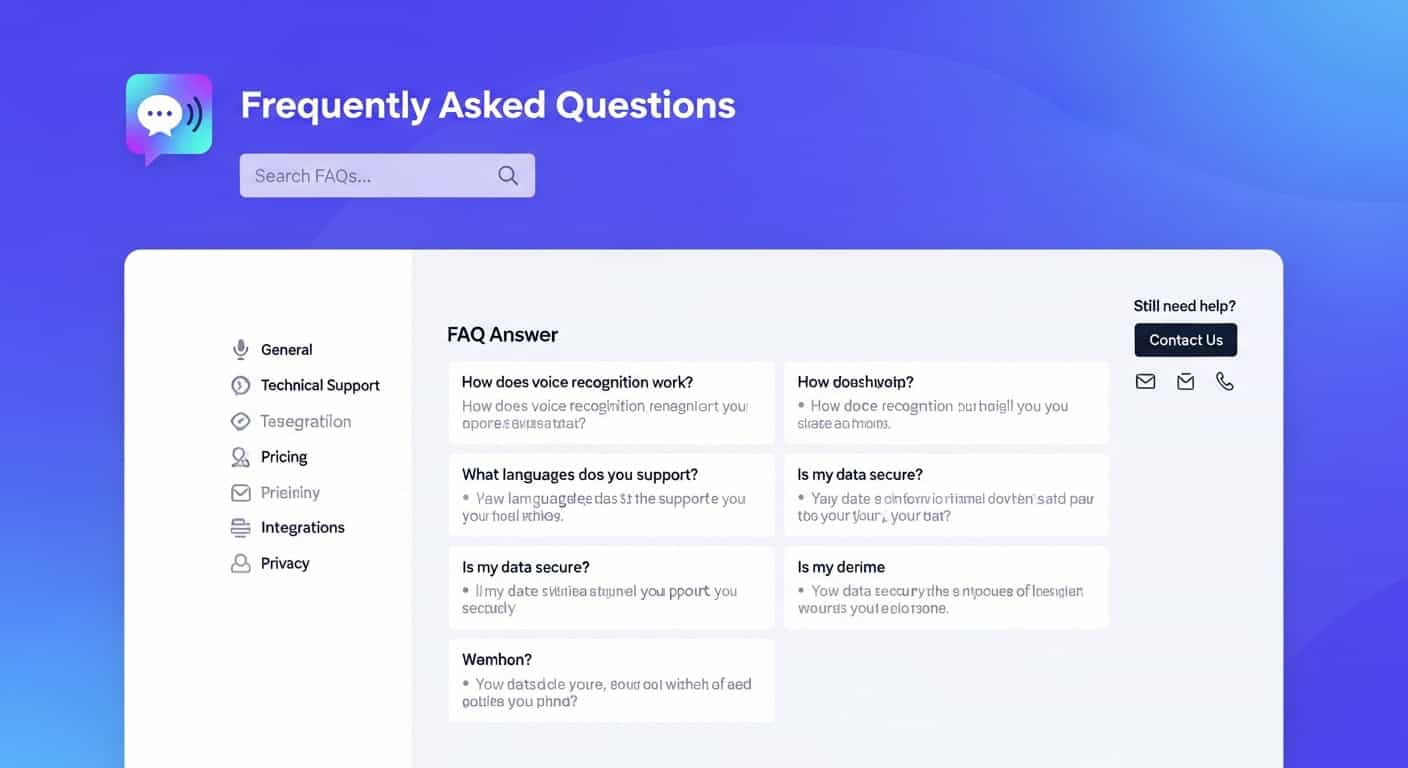
FAQ pages are the perfect vehicle for voice search optimization. They naturally mirror the Question/Answer format of voice interaction.
Voice queries are usually longer, natural-language, question-based phrases (who, what, when, where, why, how). An FAQ page directly mirrors this, increasing the likelihood of matching user queries.
TIP: Structure FAQs with the question in an H3 tag and the answer immediately following in a concise paragraph (ideally under 50 words for easy reading by voice assistants).
Local SEO and “Near Me” Voice Queries

Voice search is heavily tied to local intent (“find a plumber near me open now”). So optimize your Google Business Profile, and make sure your hours, services, and location data are accurate and up to date.
Optimizing for voice is really about optimizing for humans asking natural questions.
If your content provides direct, conversational answers, you will win on both desktop and voice devices.