

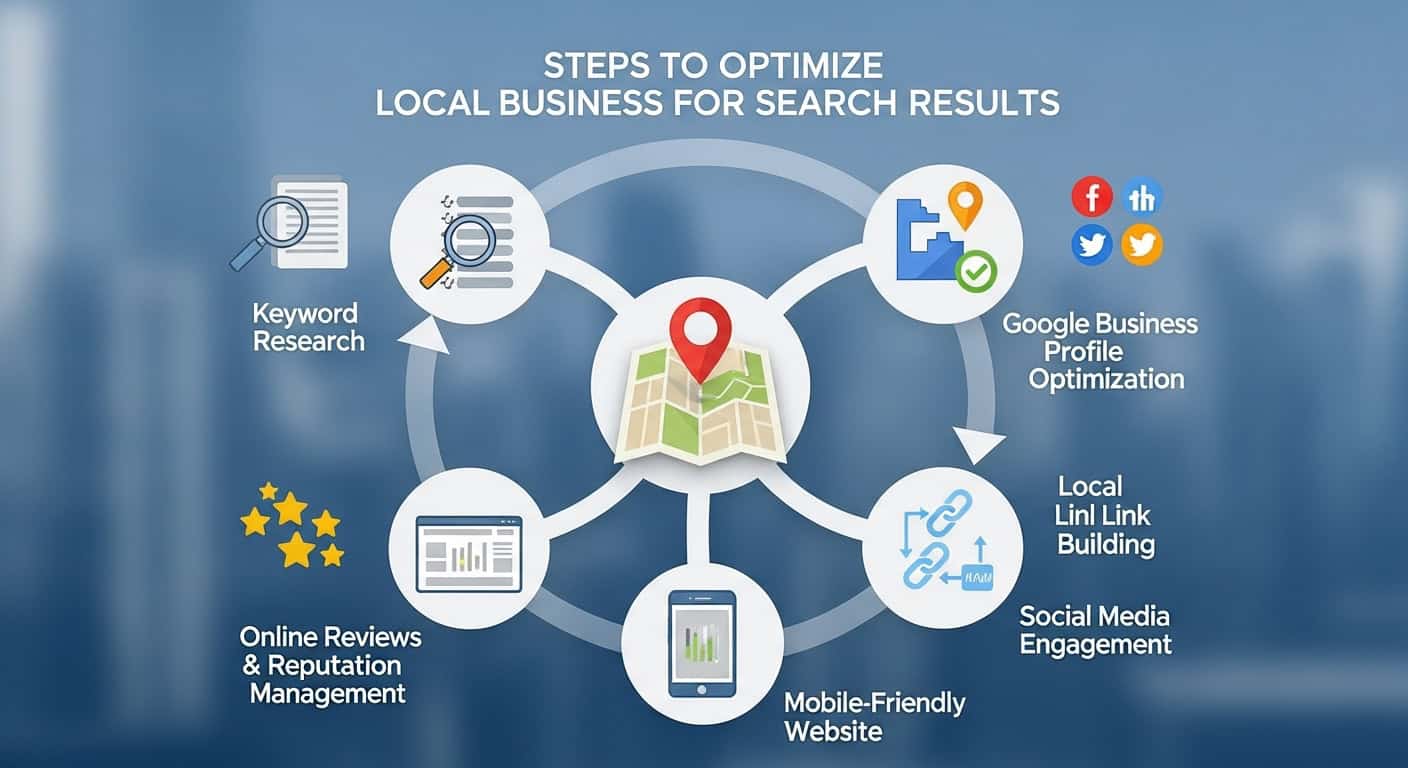
How to Optimize a Local Business for Search Results
1. Claim and Enhance Your Google Business Profile
Start your local SEO strategy by claiming and optimizing your Google Business Profile (GBP).
This is a critical step to appear in “near me” searches and on Google Maps.
- Accuracy: Ensure your Business Name, Address, and Phone Number (NAP) are up to date and consistent.
- Engagement: Post business updates regularly, upload high-quality photos/videos, and include clear Calls to Action (CTAs) to drive phone calls and foot traffic.
- Authority: Businesses with complete profiles are twice as likely to be considered reputable by users.
2. Leverage Local Listings and Niche Platforms
Beyond Google, make your brand discoverable across a variety of online directories and community-focused platforms.
- Local Directories: Create profiles on sites like Yelp, MerchantCircle, and SuperPages.
- Neighborhood Platforms: Use neighborhood-based sites like Nextdoor and Alignable to foster local connections and referrals.
- Consistency: Consistent citations across these platforms strengthen your “link authority,” which search engines use as a ranking factor.
3. Implement On-Page Local Optimization
Structure your website to signal local relevance to both search engines and AI models.
- Location-Specific Content: Create dedicated landing pages for different service areas using location-specific keywords in headings, subheadings, and meta tags.
- Local Media: Incorporate photos and videos of your storefront and staff. Visitors are more likely to support a local business if they recognize the location or team.
- Technical SEO: Ensure the site is mobile-optimized and loads quickly. Google favors mobile-first design and often updates its mobile index more frequently than its desktop counterpart.
4. Master Reputation Management
Online reviews are a powerful signal of trust and authority.
- Proactive Collection: Don’t be shy about asking for reviews; you can even send GMB review links via SMS to make it easier for customers.
- Active Monitoring: Respond to all reviews, especially negative ones, in a timely and thoughtful manner. This shows you value customer feedback and are willing to resolve issues.
5. Adopt a “Search Everywhere” Strategy
Modern Search extends far beyond the Google search bar. A Search Everywhere Optimization strategy ensures you are visible where your customers spend their time.
- Social Search: People often use platforms like YouTube, TikTok, and Instagram to discover products. Consistent posting on these platforms builds familiarity.
- Short-Form Video: Leveraging short, effective video ads on Facebook Reels or TikTok can drive significant traffic and boost brand recognition.
6. Future-Proof for AI and LLM Search
With the rise of Large Language Models (LLMs) like ChatGPT, Gemini, and Perplexity, businesses must optimize for Generative Engine Optimization (GEO).
- Answering Intent: Use natural language to answer fundamental questions your customers ask. This helps AI models associate your site with specific topics.
- Structured Data: VISIONEFX emphasizes understanding how AI models perceive link structure and content. Aligning your site’s architecture with these models ensures your business is recommended when AI “does the asking.”
People Also Ask
Google Business Profile & Local Presence
- Where should I start my local SEO strategy? Your local strategy should begin with claiming and optimizing your Google Business Profile (GBP), which is critical for appearing in “near me” searches and on Google Maps.
- What is NAP and why does it matter? NAP stands for Name, Address, and Phone Number. Ensuring this information is accurate and consistent across the web is a fundamental step in local SEO.
- How can I make my Google Business Profile more engaging? Post updates regularly, upload high-quality photos or videos, and include clear Calls to Action (CTAs) to drive traffic and calls.
- Does a complete Google Business Profile affect my reputation? Businesses with complete profiles are twice as likely to be considered reputable by users.
- What other local listings should my business be on? Beyond Google, you should create profiles on local directories like Yelp, MerchantCircle, and SuperPages.
- Are neighborhood platforms like Nextdoor useful for SEO? Using platforms like Nextdoor and Alignable helps foster local connections and strengthens your “link authority” through consistent citations.
On-Page & Technical SEO
- How do I signal “local relevance” on my website? Create location-specific landing pages using local keywords in your headings, subheadings, and meta tags.
- Should I include photos of my staff and storefront? Incorporating local media makes visitors more likely to support your business as they recognize your team and location.
- How does mobile-first design impact local search? Google favors mobile-optimized sites and often updates its mobile index more frequently than desktop, making it essential for local rankings.
Reputation & Reviews
- How can I proactively collect more online reviews? Make it easier for customers by sending GMB review links via SMS.
- How should I handle negative reviews? Respond to all reviews in a timely, thoughtful way, showing you value feedback and are willing to resolve issues.
Modern Search Strategies
- What is “Search Everywhere Optimization”? A Search Everywhere strategy ensures your brand is visible where customers spend time, including YouTube, TikTok, and Instagram, rather than just the Google search bar.
- Can short-form videos help my local business? Leveraging short video ads on platforms like Facebook Reels or TikTok can drive significant traffic and boost brand recognition.
- What are LLMs and how do they change Search? Large Language Models (LLMs) like ChatGPT, Gemini, and Perplexity are changing how users find information, requiring a shift toward AI-friendly optimization.
- What is Generative Engine Optimization (GEO)? GEO involves optimizing your site so AI models interpret your content and link structure correctly, ensuring AI tools recommend your business.
- How do I optimize my content for AI search? Focus on answering intent by using natural language to answer the fundamental questions your customers are asking.
- Can search engines identify AI-generated content? The short answer is yes, which is why it is important to understand how AI content impacts your overall SEO strategy.
Business & Maintenance
- Why should I choose a custom site over a DIY builder like Wix? VISIONEFX explains the pros and cons of DIY builders like Wix, Squarespace, or GoDaddy versus professional development.
- How quickly can website issues be fixed? If you are waiting for fixes, VISIONEFX specializes in fast website repairs to keep your business online.
- Who is the expert behind these local SEO strategies? Rick Vidallon, the Creative Director at VISIONEFX, has extensive experience designing professional websites and managing SEO for small businesses.