

Alt Tags, Title Tags, and Strategic File Naming – all critical elements for SEO and AI Search
In 2026 and beyond, your images must do more than look good; they must communicate with search engines, AI agents, and accessibility tools.
Specifically, as search evolves into a “Machine Experience” (MX), optimizing your visual assets is now part of a successful SEO strategy.
This guide explains the technical art of image optimization, specifically focusing on the critical roles of ALT tags, image title tags, and descriptive file naming.
The Core of Image Accessibility: What Are ALT Tags?
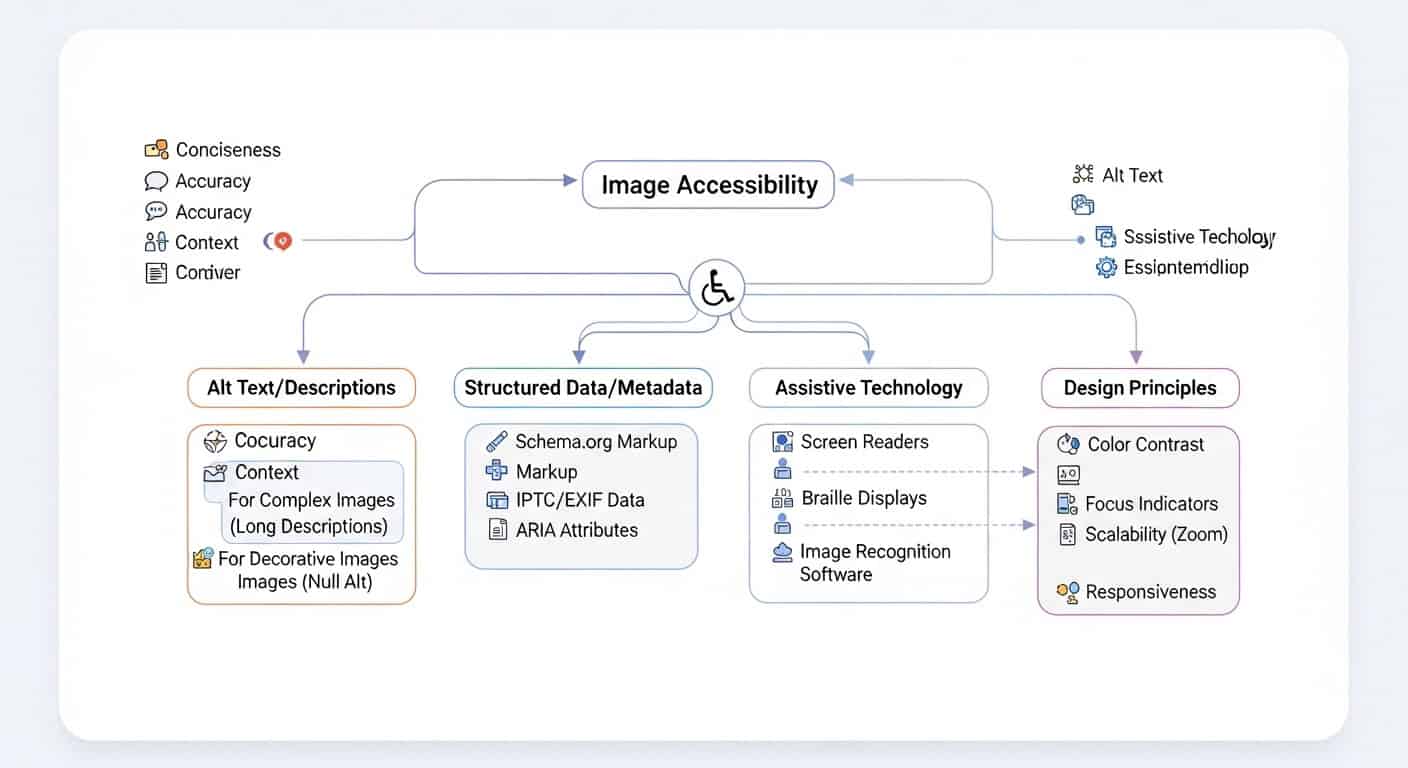
ALT tags, or more accurately, alt attributes, are the textual descriptions of images stored within your website’s HTML code.
While invisible to most casual browsers, they bridge your visual content and the world of non-visual data.
1. Accessibility First
The fundamental purpose of alt text is accessibility. For users with visual impairments who rely on screen readers, the alt tag is the only way to understand what an image depicts. According to Texas Tech University, a missing alt attribute forces a screen reader to read the file name instead—a jarring experience when the file is named IMG_9482.jpg.
2. The SEO Advantage
Search engines like Google and Bing cannot “see” images in the way humans do. They rely on metadata to understand the context and relevance of your visuals. By providing descriptive alt text, you are essentially telling Google: “This is a high-quality photo of our custom web design project in Virginia Beach.” Metadata allows your site to rank higher not just in traditional web search, but in Google Image Search, which accounts for a significant portion of organic traffic.
3. Fallback for Slow Connections
As we discuss in our website maintenance insights, loading speed is a critical ranking factor. If a visitor has a slow connection and an image fails to render, the alt text appears in its place. Fallback text ensures the user still receives the intended message even when the technology falters.
ALT Tags vs. Image Title Tags: Clearing the Confusion
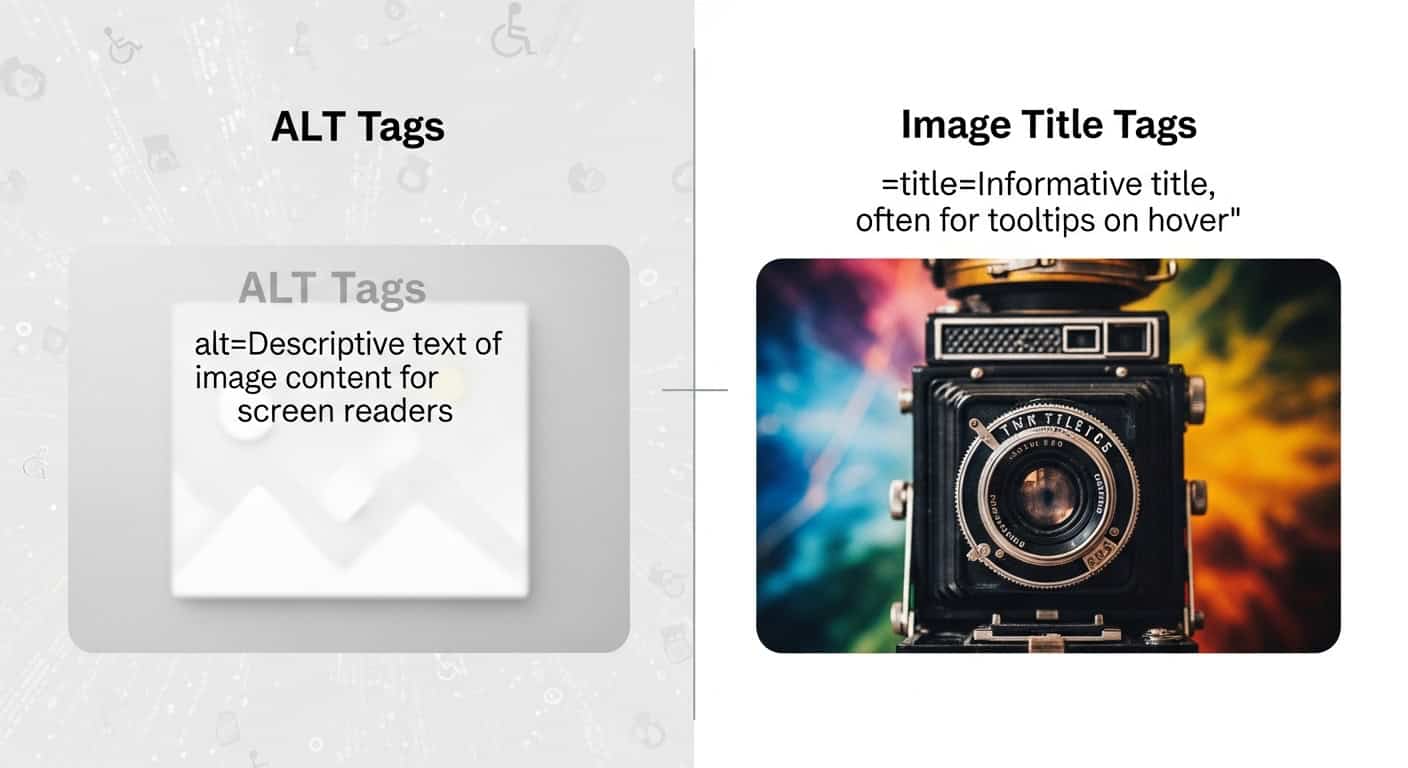
Many business owners confuse alt tags with image title tags. While both are image attributes, they serve very different masters.
| Feature | ALT Tag (Alt Attribute) | Image Title Tag |
| Primary Goal | Accessibility and SEO | User Experience (Tooltip) |
| Display | Shown if the image fails to load | Shown on mouse hover |
| Search Engine Impact | High; used for indexing and ranking | Low to None; primarily informational |
| Accessibility Impact | Critical for screen readers | Minimal; often ignored by assistive tools |
| Required? | Yes, for ADA compliance | Optional |
The Difference in Application
An ALT tag should be a descriptive summary of the image’s content. A Title tag, on the other hand, is the text that appears in a small “tooltip” box when a user hovers their mouse over the image.
Purdue University suggests that while title tags are not a ranking factor, they can provide extra context for browsers. However, they should never replace alt text. If you have to choose where to spend your energy, focus on the alt attribute.
The SEO Power of Strategic File Naming
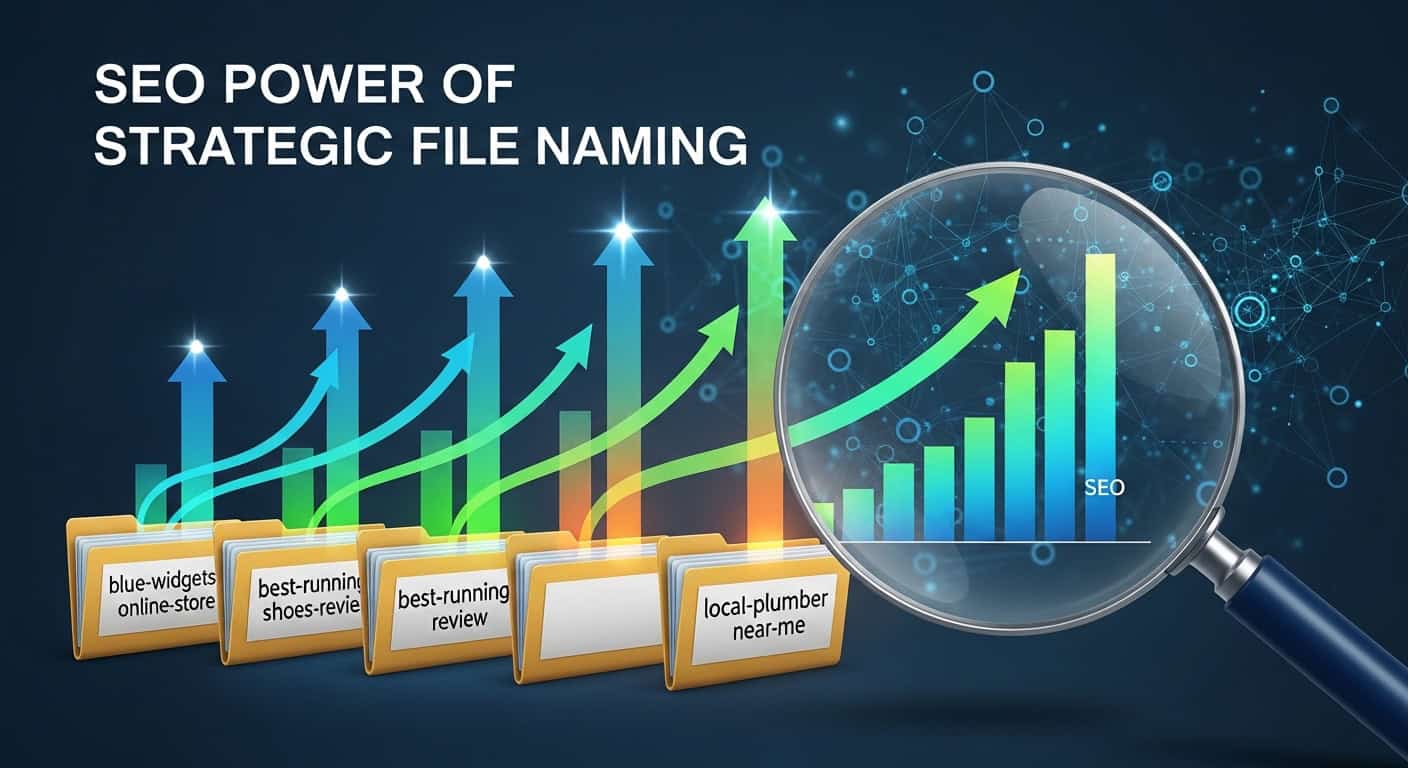
Before you upload a photo to WordPress or a custom CMS, its journey to the top of Google starts with the file name. Many people make the mistake of leaving default camera names like DSC001.png. Not defining your file name is a missed opportunity to rank on Google.
Best Practices for File Names:
- Be Descriptive: If your image is a screenshot of a new eCommerce store, you might name it ecommerce-web-design-[your city].jpg.
- Use Hyphens, Not Underscores: Google treats hyphens as word separators, whereas underscores often merge words. According to Winthrop University, red-wagon.jpg is treated as two keywords, whereas red_wagon.jpg might be treated as one.
- Keep it Lowercase: For consistency across different server environments (Linux vs. Windows), always use lowercase letters.
- Avoid Keyword Stuffing: Don’t name your file best-seo-seo-services-seo-expert.jpg. Google’s AI is sophisticated enough to detect and penalize spammy behavior. Instead, follow the “Human-Centric” approach we advocate for in our SEO articles.
Image Optimization Checklist for 2026
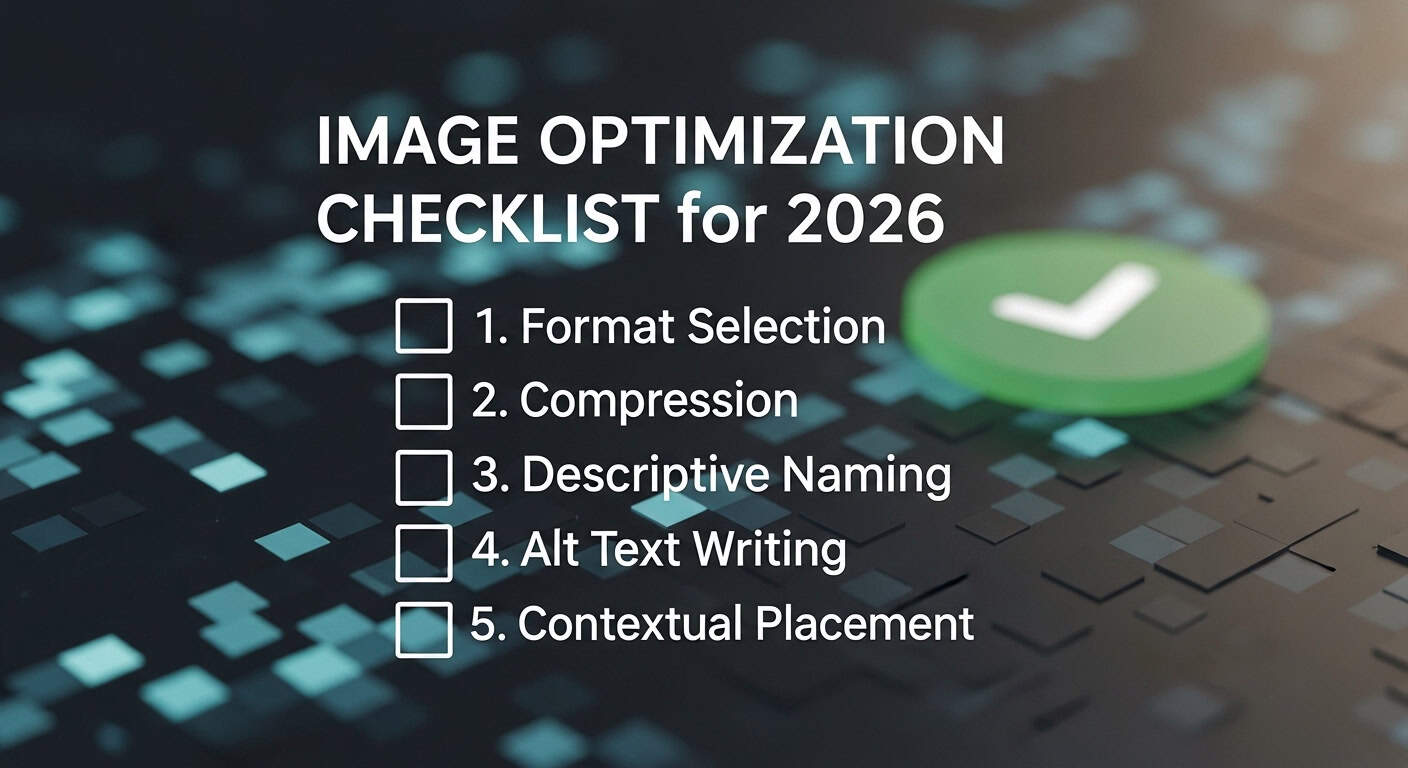
To ensure your visuals are fully optimized for both humans and the latest AI Search models, follow this step-by-step process for every image on your site:
- Format Selection: Use JPEGs for photographs and PNGs for graphics with transparency. For maximum performance, consider the modern WebP format.
- Compression: Use tools like Semrush or Ahrefs to identify heavy images that slow down your site. Large files are “hidden saboteurs” of your rankings.
- Descriptive Naming: Rename your file using 2-4 keywords separated by hyphens.
- Alt Text Writing: Write a 5-10-word description. Avoid starting with “Image of…”—screen readers already announce that it’s an image.
- Contextual Placement: Place the image near relevant text. Google uses the surrounding copy to further refine its understanding of the visual content.
Visual Intelligence and the Era of AI Search

As we move toward AI & LLM Search visibility, the way bots process images is changing.
Search engines are no longer just looking at tags; they are using computer vision to “read” the pixels.
However, the metadata you provide confirms what the AI “thinks” it sees.
In the Search Everywhere Optimization strategy, your images might appear on Pinterest, TikTok, or LinkedIn.
Consistent, descriptive tagging keeps your brand identity strong across all platforms. At VISIONEFX, we don’t just build websites; we build authority.
Whether it’s through fixing broken links or implementing deep technical SEO/GEO, our goal is to keep your business “on top of people’s minds.”
Technical Maintenance: Keeping Your Visuals Fresh
A website is not a static flyer; it is a living marketing asset. Regular website tune-ups are essential to ensure that as your business grows, your image library doesn’t become a liability.
Technical debt, such as missing alt tags on new products or broken image links, can quietly erode your ranking.
Our maintenance packages include proactive monitoring to catch these issues before they impact your bottom line.
We handle everything from hacking remediation to performance audits, acting as your “personal webmaster.”
Conclusion: Elevate Your Brand with VISIONEFX
Optimizing your images is both a science and an art.
It requires a deep understanding of how Google works and a commitment to providing the best possible user experience.
By mastering ALT tags and file naming, you aren’t just checking a box for a search engine—you are making your business more accessible and more professional.
If you are ready to stop waiting for results and start launching a successful website that dominates the competition, VISIONEFX is here to help.
From custom database programming to world-class WordPress web design, we have the expertise to elevate your brand.
Ready to see how your website stacks up? Contact us today for a free SEO analysis, and let’s get started on your journey to the top of the search results.
References and Further Reading:
- George Mason University: How to Add Alt Text to Images
- Stanford Medicine: SEO & Accessibility Quick Guide
- Semrush: Image SEO: How to Optimize Images for Search Engines
Ahrefs: Image SEO: 12 Actionable Tips for More Organic Traffic