

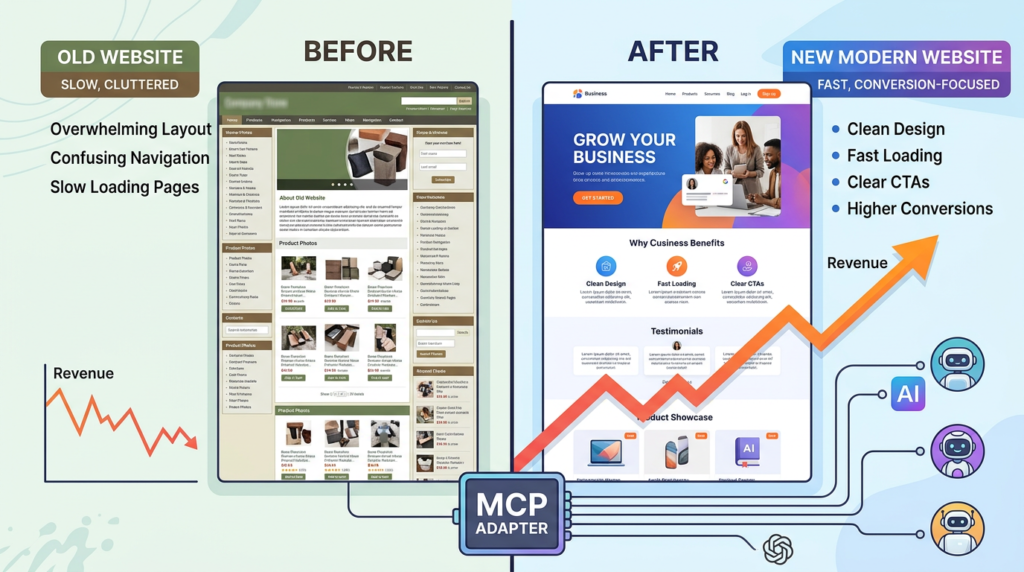
Is a Website Redesign Worth the Investment? Every Advantage, Explained
Your website is either your hardest-working salesperson or your most expensive liability—and it can flip from one to the other faster than most business owners realize. Design conventions shift, Google’s rules change, mobile keeps growing, and now AI answers are deciding which businesses even get seen.
So is a redesign worth the money? The data says yes — emphatically — but only when it’s done as a strategic project rather than a fresh coat of paint. Here’s the complete case: every advantage a well-executed redesign delivers, the numbers behind each one, and the signs it’s time.
First, a Mindset Shift: A Redesign Is a Revenue Project, Not a Facelift
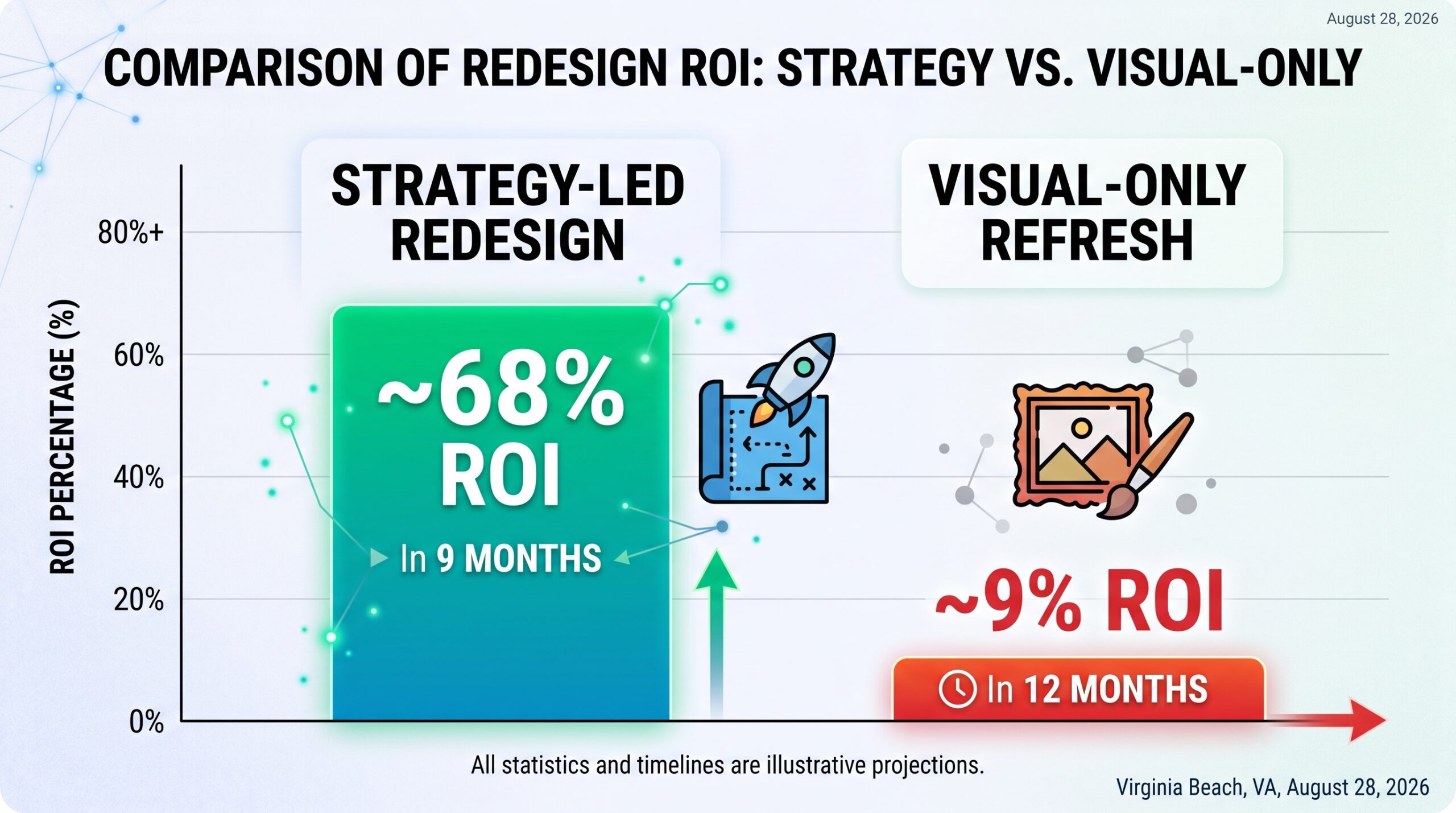
The single most important finding in redesign research is the gap between strategy-led projects and cosmetic ones. A 2026 KrishaWeb analysis found strategy-led redesigns returned roughly 68% ROI within nine months, while purely visual refreshes averaged closer to 9% over a full year. Industry benchmarks from Utsubo put conversion lifts from well-executed redesigns in the 20–50% range, with service businesses typically reaching payback in 4 to 14 months.
In other words: the ROI doesn’t come from prettier — it comes from faster, clearer, and easier to buy from, with design as the delivery mechanism. Keep that frame in mind as you read the advantages below.
first, A mindset shift: A Redesign is a revenue Project, Not A Facelift
The Advantages of a Website Redesign
1. Instant Credibility — Because Visitors Judge in a Blink
Visitors form an opinion of your site in about 0.05 seconds, and research consistently shows roughly 94% of first impressions are design-related. Stanford’s Web Credibility Project found that 75% of users judge a company’s credibility by its website design, and 92% say they distrust outdated or poorly designed sites. Before anyone reads a word of your carefully written copy, your design has already told them whether you’re a professional operation. A redesign resets that verdict in your favor.
2. Higher Conversion Rates and More Leads
Design decisions are conversion decisions. Studies show a well-designed user experience can lift conversion rates by up to 400%. At the same time, heatmap research finds that 47% of users abandon sites because of poor form usability or missing calls to action—and 44% will leave for a competitor if they can’t quickly find contact information. A redesign is your chance to rebuild every page around a clear next step: simpler forms, prominent CTAs, visible social proof, and less friction on revenue-driving paths.
3. Speed That Pays for Itself
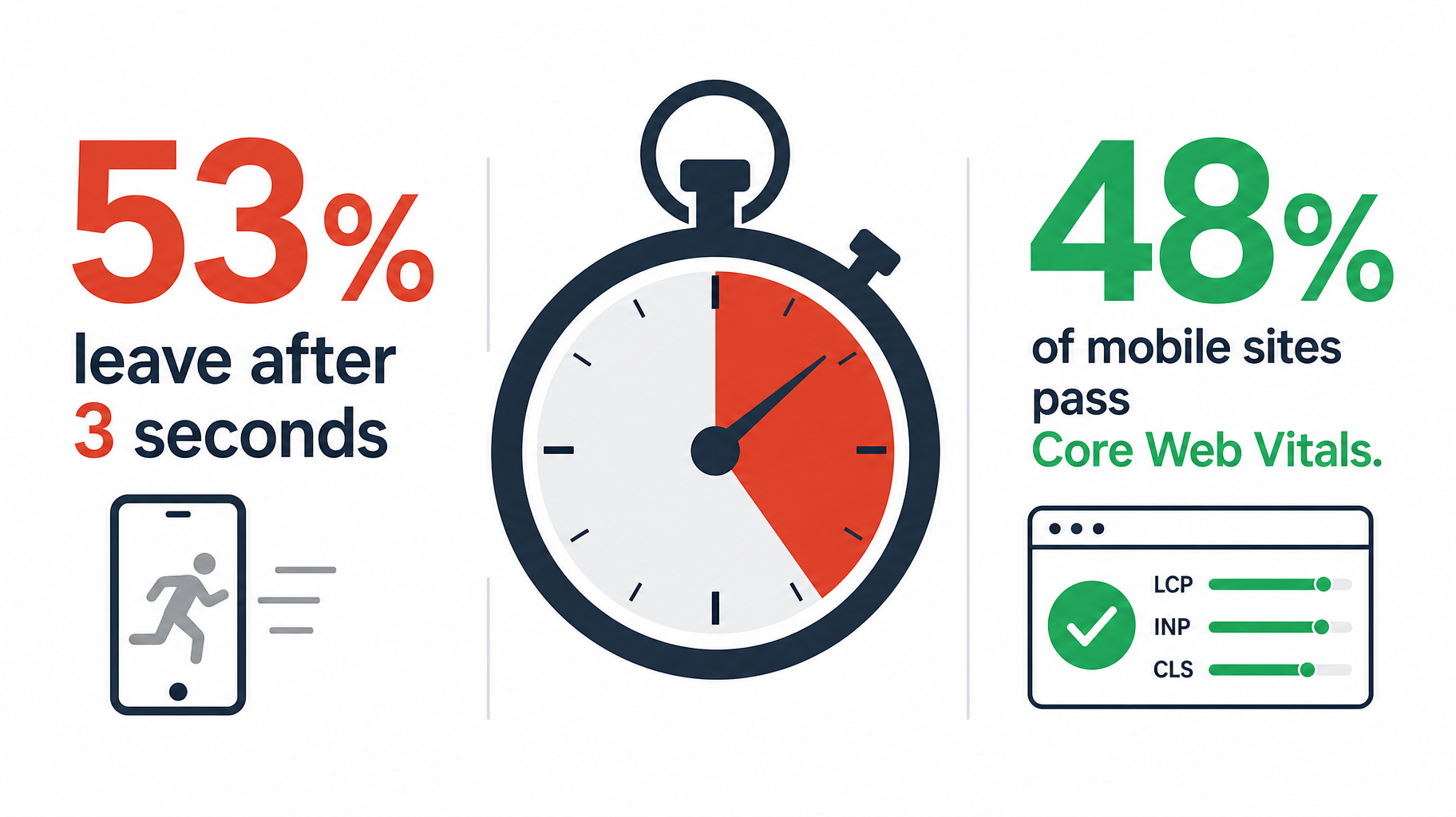
Slow sites bleed revenue quietly. Around 53% of visitors leave a page that takes more than three seconds to load; a one-second delay can cut conversions by roughly 7%, and pages that load in one second convert about three times as often as pages that take five. Here’s the opportunity hiding in that data: HTTP Archive’s Web Almanac found only 48% of mobile websites achieved good Core Web Vitals in 2025. Most of your competitors are failing Google’s own speed standards — a rebuilt site on modern, lightweight code puts you in the passing half.
4. A Mobile Experience, Not a Shrunken Desktop Site
Mobile devices now drive well over 60% of web traffic, and Google uses mobile-first indexing for every website — meaning the mobile version of your site *is* your site as far as rankings are concerned. Mobile-optimized sites see substantially higher conversion rates, while mobile users are five times more likely to abandon a site that isn’t built for their device. If your current site was designed desktop-first and adapted down, a redesign flips that priority to match how your customers actually browse.
5. A Foundation for SEO Growth
Years of patches, plugins, and content sprawl leave most older sites with tangled architecture, thin pages, bloated code, and missing or broken structured data. A redesign is the moment to fix it all at once: logical site structure, clean URLs, proper heading hierarchy, schema markup, and Core Web Vitals built in rather than bolted on. The KrishaWeb data shows organic traffic gains compounding to roughly 68% by the twelve-month mark for strategic redesigns. One honest caveat: a redesign done carelessly — without redirect mapping and an SEO migration plan — can *lose* rankings. That’s why the process matters as much as the design. See our SEO-first redesign process.
6. Visibility in AI Search — the New Battleground
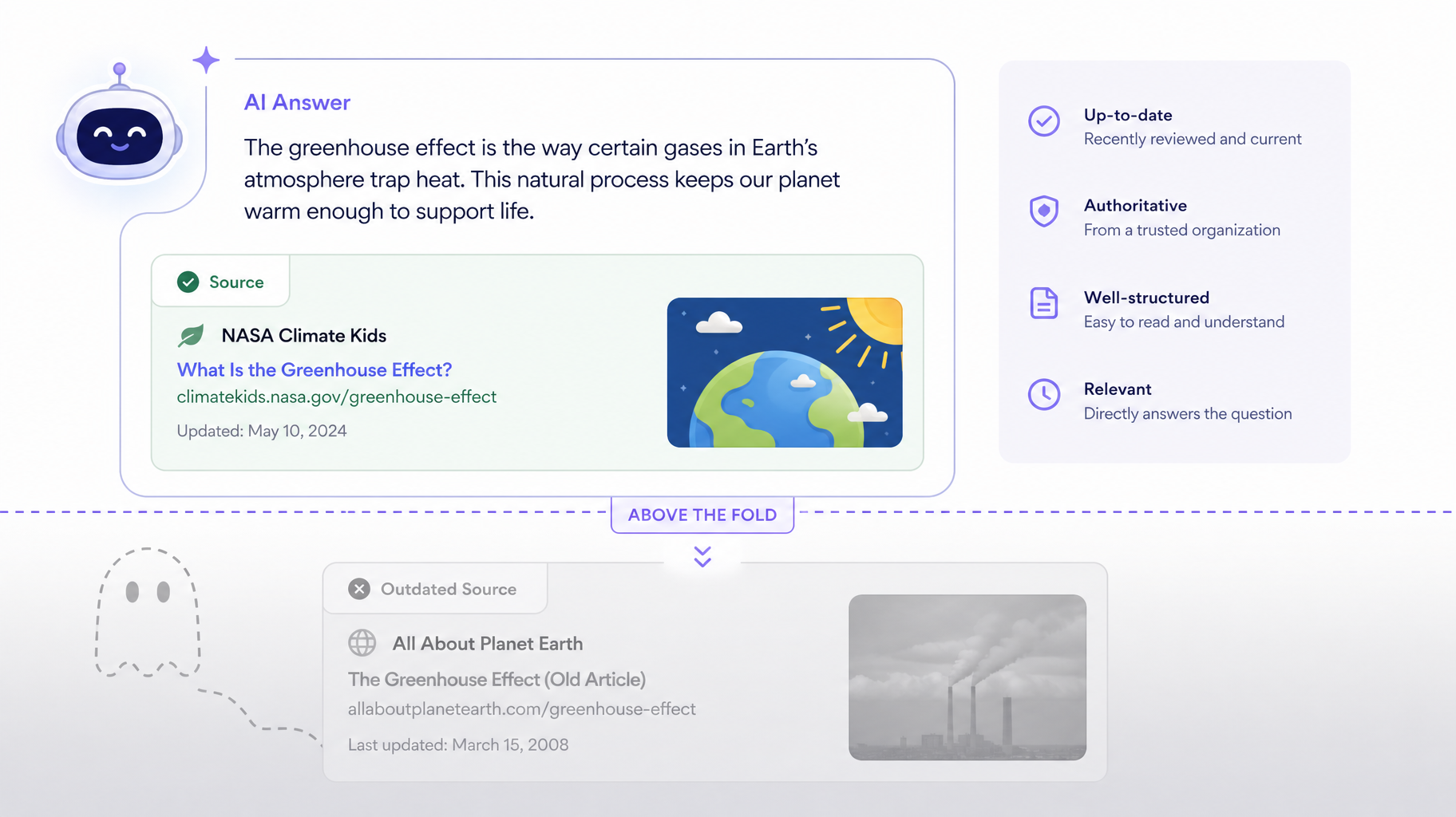
This advantage didn’t exist during your last redesign. Google’s AI Overviews and AI Mode now answer many searches directly, and when an AI Overview appears, clicks to traditional results drop sharply. Winning in this environment means being the source AI systems cite — which requires exactly what a modern rebuild delivers: semantic HTML, comprehensive schema markup, fast rendering, question-answering content structure, and a fresh publishing foundation. As we detailed in our article on the death of the 10 blue links, visibility is being redefined from rankings to citations. A current site also positions you for Google’s Preferred Sources feature and WordPress 7’s built-in AI capabilities — none of which an aging build can take advantage of.
7. Security, Stability, and Fewer 2 A.M. Emergencies
Old websites run on old software: outdated CMS versions, abandoned plugins, legacy page builders, and PHP versions that have aged out of support. Each one is an open window, and a single breach can erase years of brand equity and customer trust overnight. A redesign replaces the patchwork with a current, supported, hardened stack — and dramatically reduces the odd breakages, conflicts, and downtime that plague aging sites.
8. Accessibility and Legal Peace of Mind
Accessibility is both the right thing and the smart thing. Building to WCAG standards during a redesign—proper contrast, keyboard navigation, descriptive alt text, screen-reader-friendly structure—opens your business to millions of users with disabilities, reduces exposure to ADA-related legal claims, and overlaps heavily with SEO best practices. Notably, 79% of screen reader users primarily browse on mobile, so accessibility and mobile experience are the same. Retrofitting accessibility onto an old site is painful; building it in from day one is nearly free.
9. Easier Updates and Lower Ongoing Costs
An aging site makes every change expensive — small edits require a developer, layouts fight back, and marketing ideas die waiting in a queue. Modern builds put content control in your team’s hands, so publishing a new page or landing offer takes minutes instead of tickets. That content velocity compounds: faster campaigns, faster testing, faster response to the market. Paying down years of technical debt in one project is almost always cheaper than dragging it forward indefinitely.
10. A Brand That Matches Who You’ve Become
Businesses evolve — new services, new markets, new positioning — but websites freeze at the moment they launched. When 38% of visitors will stop engaging with an unattractive or outdated layout, a site that reflects your 2019 self actively undersells your 2026 capabilities. A redesign realigns your digital presence with your actual brand and, just as importantly, with your competitive set: your website is judged side by side against your best competitor’s every single day.
Signs It’s Time
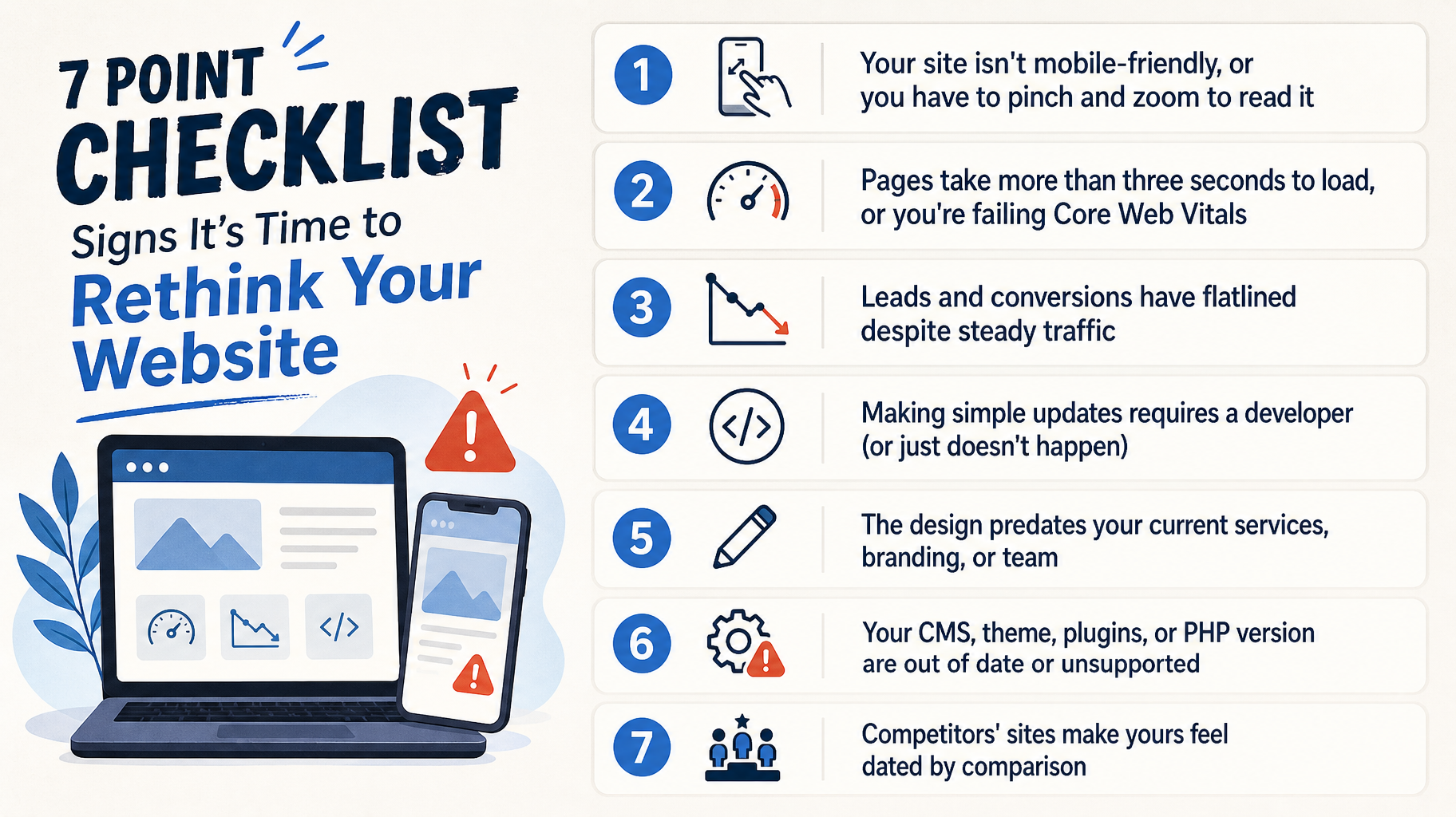
You don’t need all of these — two or three are enough to justify a serious conversation:
- Your site isn’t mobile-friendly, or you have to pinch and zoom to read it
- Pages take more than three seconds to load, or you’re failing Core Web Vitals
- Leads and conversions have flatlined despite steady traffic
- Making simple updates requires a developer (or doesn’t happen)
- The design predates your current services, branding, or team
- Your CMS, theme, plugins, or PHP version are out of date or unsupported
- Competitors’ sites make yours feel dated by comparison
Protecting the Investment: Redesign Without Losing What Works
The advantages above only materialize when you run the project strategically. That means auditing baseline metrics before touching anything, preserving what already ranks and converts, mapping 301 redirects for every URL that changes, setting performance budgets so the new site launches fast, and treating the first 90 days after launch as an optimization phase — heatmaps, A/B tests, and SEO fine-tuning — rather than the finish line. Teams that skip that phase capture only a fraction of their potential return. Choose a partner who talks about this process before they talk about colors.
See 7 Real-World Before and After Website Redesigns
See seven (7) before and after website redesigns on YouTube.
FAQ
How often should a website be redesigned?
There’s no fixed schedule, but most business sites hit meaningful decay within three to five years as design standards, devices, search algorithms, and now AI systems evolve. The better trigger is performance: when the site stops converting, stops ranking, or can’t support what the business needs next, it’s time — regardless of age.
Will a redesign hurt my SEO?
Only if it’s done without an SEO migration plan, redesigns that skip redirect mapping and content preservation can lose hard-won rankings. Done properly — with 301 redirects, preserved high-performing content, improved site structure, and schema markup — a redesign typically *improves* organic visibility over the following months.
How much does a website redesign cost, and when does it pay back?
Investment varies widely with scope, but 2026 industry benchmarks place strategic small-business redesigns in the five-figure range, with well-executed projects reaching payback in roughly 4 to 14 months through improved conversions and organic growth. The more useful question than “what does it cost?” is “what is the current site costing you?” — in lost leads, lost rankings, and maintenance overhead.
How long does a redesign take?
Typical business site redesigns run about 8 to 16 weeks depending on scope, content readiness, and approvals. Strategy, content, and SEO migration planning deserve real time up front — rushing those phases is how redesigns end up as expensive facelifts.
Do I need a full redesign or just a refresh?
If the foundation is sound — modern platform, good structure, solid speed — a targeted refresh of design and conversion elements may be enough. If the site fails on mobile, speed, security, or structure, a refresh is lipstick on technical debt. An honest audit will tell you where you are.
The Bottom Line
A website redesign is worth the investment for the same reason it’s risky to skip: your website is where credibility is judged in a blink, where conversions are won or lost in seconds of load time, and — increasingly — where AI systems decide whether your business gets cited at all. The data is consistent: strategic redesigns pay for themselves in months, then keep compounding through conversions, rankings, security, and speed to market. Cosmetic ones don’t. Invest in the former.
Wondering what your current site is quietly costing you? Request a no-pressure website audit, and we’ll show you exactly where the opportunities are.