

Google Preferred Sources: The Free Visibility Boost Most Websites Are Ignoring
For two years, website owners have watched AI-generated answers absorb the clicks that used to be theirs. Google Preferred Sources is the rare update that runs in the other direction — a feature that lets your readers tell Google, directly, “show me more of this site.”
And as of mid-2026, that reader vote doesn’t just shape Top Stories anymore. It now follows your audience into AI Overviews and AI Mode, the surfaces where search visibility is actually being decided. Here’s what Preferred Sources is, how it helps your website, who’s eligible, and exactly how to set it up.
What Is Google Preferred Sources?
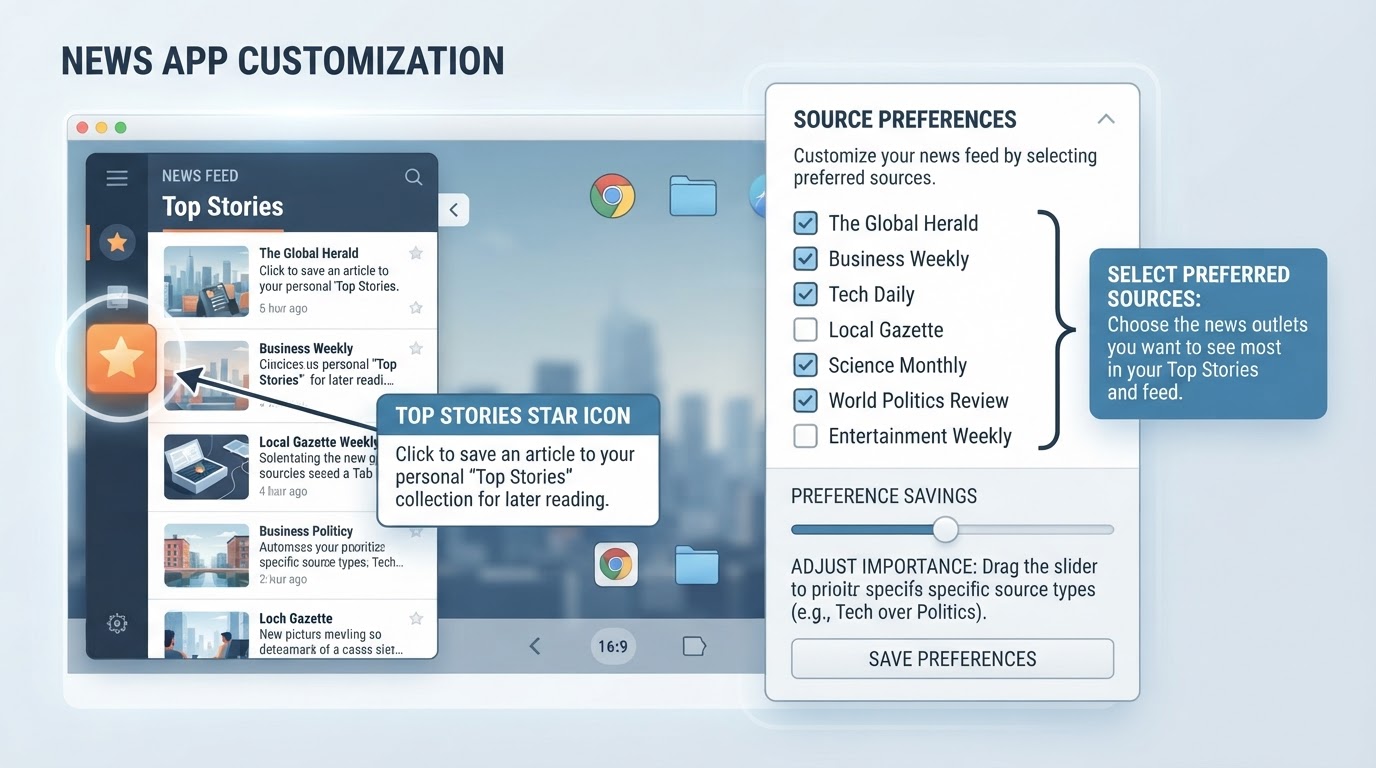
Preferred Sources is a Google Search feature that lets signed-in users hand-pick the websites they trust most. Once a reader selects your site, Google prioritizes your content for that reader — your articles appear more often in their Top Stories results, marked with a visible “Preferred” badge.
Users can add sources two ways: by clicking the star icon next to the Top Stories header on any news-style search, or through their Google account under Search personalization → Source preferences. A selection made in either place applies everywhere, and it persists across every browser the user signs into.
Google revealed that Preferred Sources now extends into AI Overviews and AI Mode
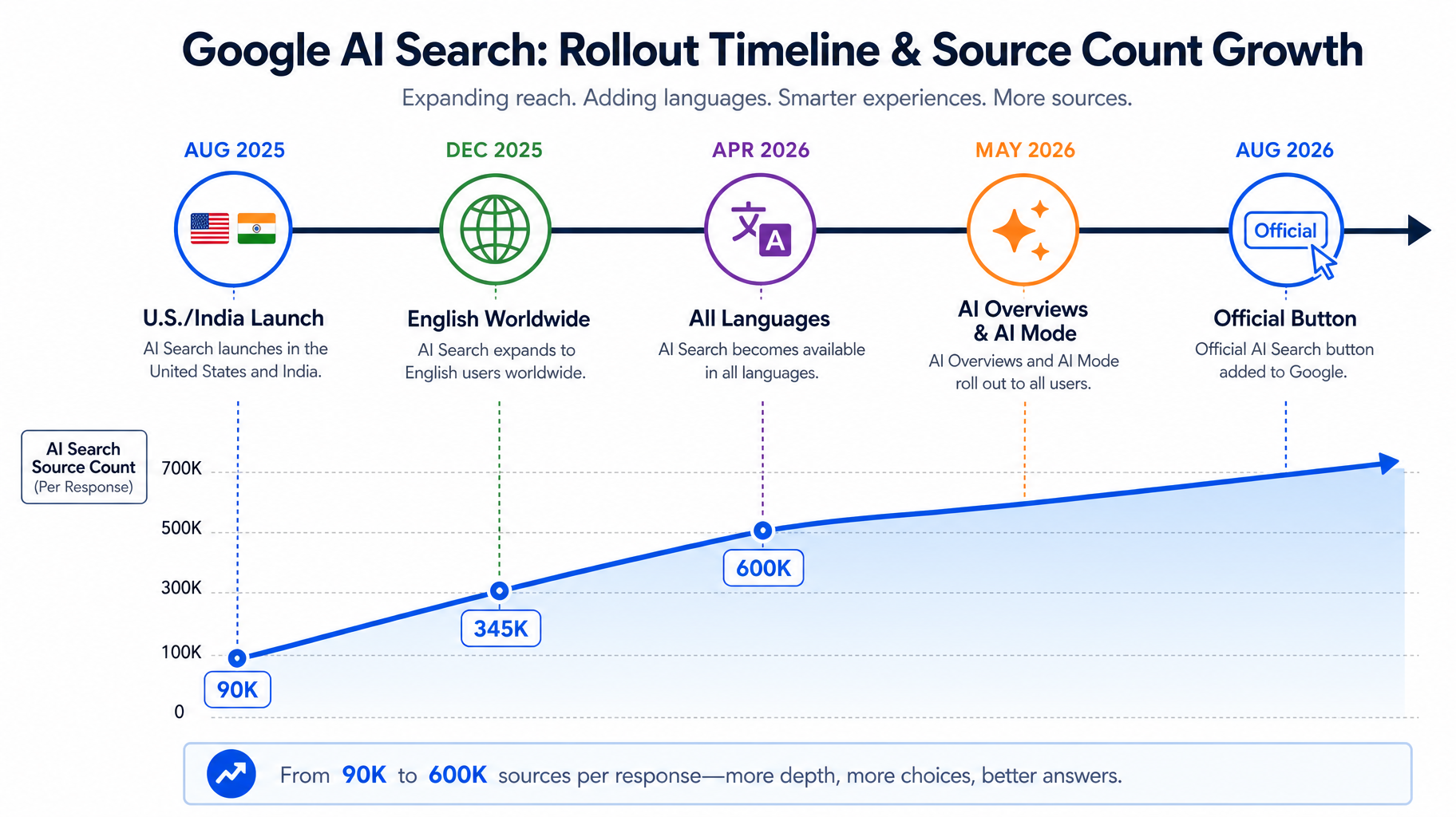 The feature moved fast. Google launched it in the U.S. and India in August 2025 after a Search Labs experiment, expanded it to English worldwide in December 2025, and rolled it out to all supported languages on April 30, 2026. Then came the announcement that changed the strategic math: on May 27, 2026, Google revealed that Preferred Sources now extends into AI Overviews and AI Mode.
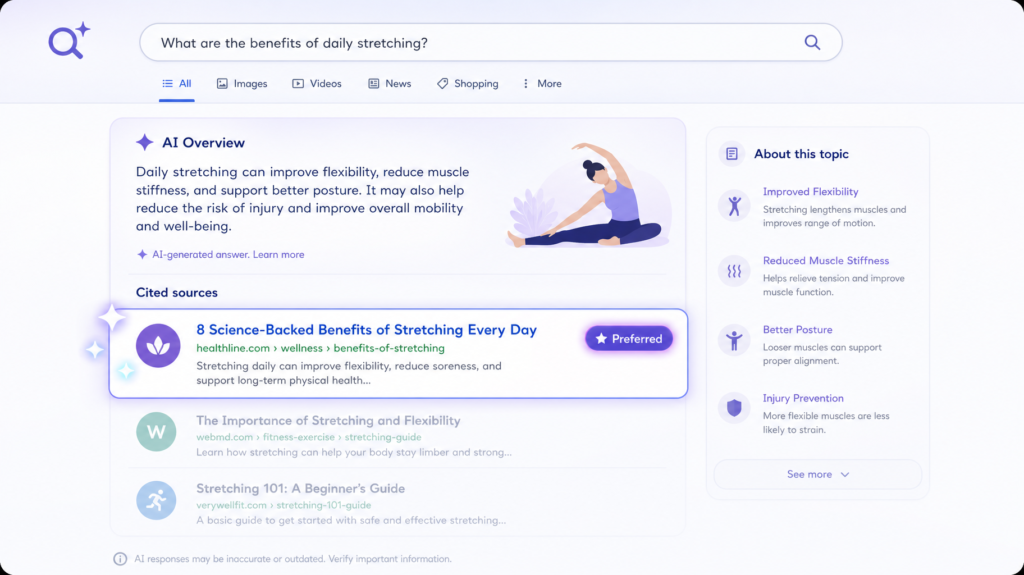
When a reader who has selected your site sees your page cited in an AI-generated answer, your link carries the Preferred badge—a trust signal sitting directly inside the AI response. Google is also surfacing Preferred Sources in new carousels that appear for developing topics.
How Preferred Sources Help Your Website
It roughly doubles your click-through rate with loyal readers.
Google’s own data says people are about twice as likely to click through to a source they’ve marked as preferred. Same article, same results page — but for the reader who picked you, your link is badged, prioritized, and familiar. In an era when an AI Overview can cut organic clicks by half or more, a 2x multiplier on your most valuable audience is no small thing.
It gives you visibility inside AI answers — without gaming an algorithm.
Almost everything in generative engine optimization involves influencing what a model chooses to cite. Preferred Sources is different: it’s earned, user-driven visibility. Your readers opt in once, and your brand stands out across Top Stories, AI Overviews, AI Mode, and the new topic carousels. According to 9to5Google, Google is also working toward using Preferred Sources as a ranking signal across its AI features, so selected sites would appear more often in AI answers — not just get badged when they happen to show up.
It turns search into a loyalty channel.
Think of it as a “follow” button living inside Google itself. Email lists and push notifications have always been the answer to algorithm dependence; Preferred Sources brings that same subscription logic into the search results page. As we covered in our article on the death of the 10 blue links, the sites that win the next era of search will be the ones users actively choose — and this feature is the mechanism for choosing.
Adoption proves people actually use it.
Readers had selected more than 345,000 unique sources by the May 2026 announcement, and Google reported that figure passed 600,000 by August 2026 — up from roughly 90,000 at the December global rollout. This isn’t an experiment gathering dust in a settings menu.
Eligibility Criteria: Can Your Website Qualify?
Here’s the good news — there’s no application, no fee, no Google News approval process, and no Search Console setting to flip. Eligibility comes down to three things in Google’s documentation:
1. Your site must be a domain or subdomain.
Only domain-level and subdomain-level sites are eligible to appear in the source preferences tool. `https://www.example.com/` qualifies. So does `https://news.example.com/`. A subdirectory like `https://www.example.com/blog` does not. If your publication lives in a subfolder of a larger site, it can’t be selected independently — the root domain is what users would add.
2. Your site must appear in the source preferences tool.
This is the eligibility test itself. Go to `google.com/preferences/source`, type your domain into the search box, and see if it comes up. If it appears, you’re eligible right now; if it doesn’t, keep reading.
3. Your site must publish fresh content regularly.
Google’s help documentation notes that sources that aren’t updated regularly may not be available in the tool. Preferred Sources grew out of Top Stories, so it favors publications with an ongoing publishing rhythm — news sites, industry blogs, magazines, and business sites with active content programs. A brochure site that hasn’t posted since 2023 is unlikely to show up. This is one more argument for a consistent editorial calendar. Our content and SEO services can help you build one.
Beyond those criteria, the standard rules apply: your content needs to be indexable and compliant with Google’s Search essentials. The feature is available globally for Top Stories in every language where Google Search operates, and in AI Overviews and AI Mode wherever those features are live.
How to Get Readers to Add You as a Preferred Source
Eligibility gets you on the list. Opt-ins get you the benefit — and Google has given publishers three official ways to ask.
The official one-click button (recommended)
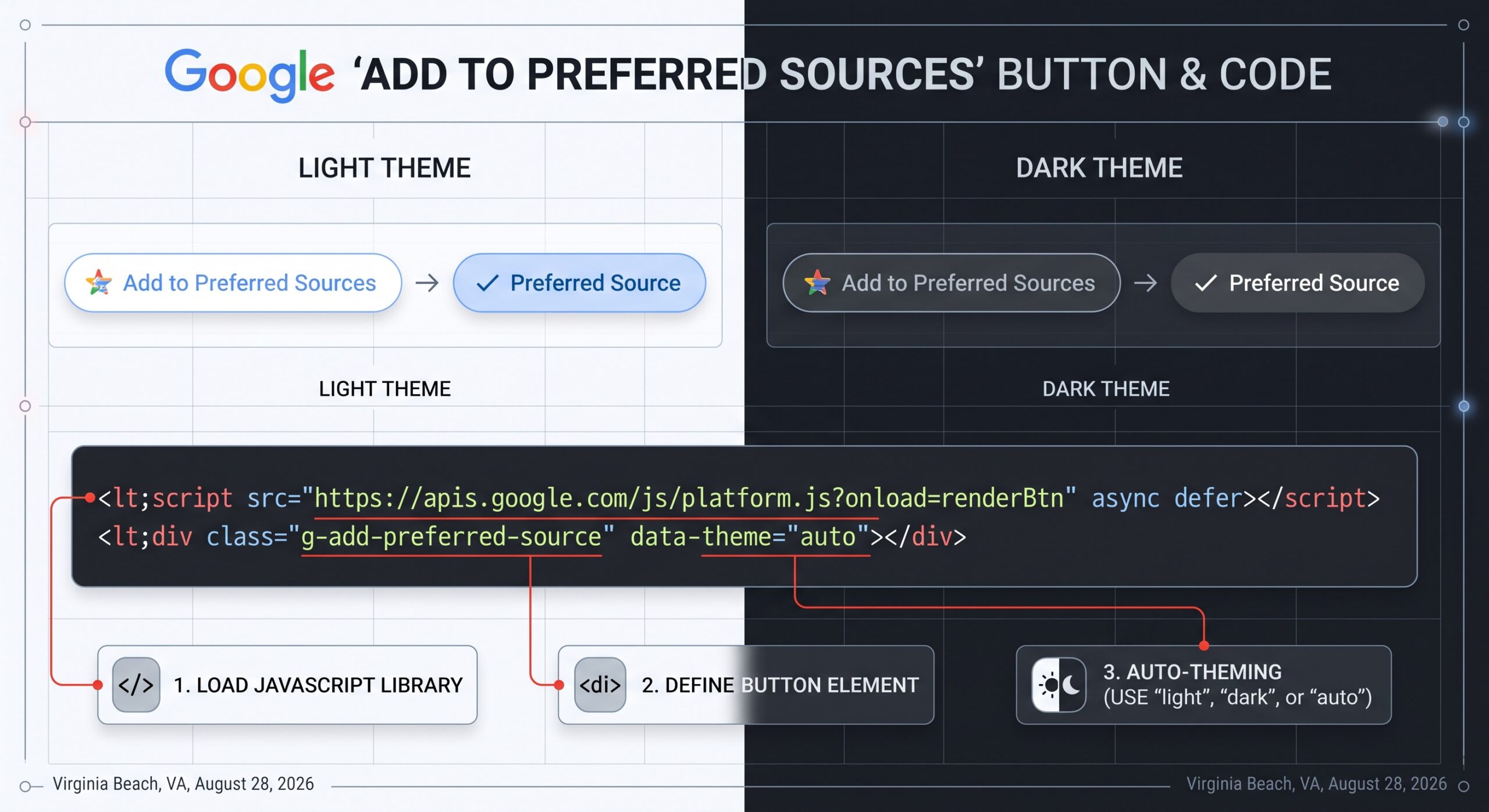
On August 20, 2026, Google released an embeddable “Add to Preferred Sources” button that takes exactly two lines of code. Add this to your site:
“`html
<script async src=”https://news.google.com/swg/js/v1/publisher.js”></script>
“`
Then place this wherever you want the button to appear:
“`html
<div google-add-preferred-source-btn></div>
“`
Google renders an automatically localized, Google-styled button; readers click it, add your site, and return to your page without leaving. You can set a dark theme with `data-theme=”dark”` or force a language with `data-lang`. WordPress users can add the script via a header/footer plugin or a theme hook, and place the button div in a template part, widget, or reusable block.
A custom-designed button.
If the standard button clashes with your design, Google’s advanced JavaScript implementation lets you trigger the same flow from your own UI elements using their SDK.
The deeplink — no code required.
Anyone can use a simple URL that opens the source preferences tool with your site pre-filled:
“`
https://www.google.com/preferences/source?q=yourdomain.com
“`
That link works anywhere: a text link in your site footer, a clickable badge (Google provides free translated badge graphics), your email newsletter, social posts, podcast show notes, or a post-purchase thank-you page. The publications winning at this treat “add us as a preferred source” the way they treated “subscribe to our newsletter” a decade ago — a standing call to action in every high-loyalty touchpoint.
The Honest Caveats
Preferred Sources is personalization, not a sitewide ranking boost. It only changes results for the specific readers who select you, so it rewards sites that already have an audience worth mobilizing. It also won’t rescue a site with no fresh content — the freshness requirement filters out static sites entirely. Treat it as one layer of a complete visibility strategy alongside technical SEO, structured data, and generative engine optimization, not a replacement for any of them.
FAQ
Is Google Preferred Sources a ranking factor?
Not in the traditional sense. It personalizes results for individual users who select your site — boosting your frequency in their Top Stories and badging your links in their AI Overviews and AI Mode answers. Google has indicated it’s working on using these selections as a signal within its AI features, but it does not change your rankings for users who haven’t picked you.
My blog lives at mysite.com/blog. Am I eligible?
Not as a standalone source. Only domains and subdomains can be selected — subdirectories can’t. Users could add your root domain, or you could consider moving an active publication to a subdomain like blog.mysite.com if Preferred Sources is strategically important to you.
Is this only for news websites?
No. The feature is anchored to Top Stories, so it favors regularly updated publications — but that includes industry blogs, trade publications, and business sites with active content programs, not just newspapers. The practical test: does your site appear when you search for it at google.com/preferences/source
How do I check whether my site is eligible?
Visit google.com/preferences/source and type your domain into the search box. If your site appears, readers can select you today. If it doesn’t, the most common fix is publishing fresh, indexable content on a consistent schedule at the domain or subdomain level.
Does it cost anything?
Nothing. There’s no fee, no application, and Google provides the official button, SDK, and badge assets for free.
The Bottom Line
Google Preferred Sources is one of the few genuinely publisher-friendly moves in the AI search era: a free, user-driven mechanism that badges your brand inside the very AI answers that have been siphoning your clicks — and roughly doubles click-through among the readers who choose you. Eligibility is simple (a regularly updated domain or subdomain), setup takes minutes, and the audience-loyalty flywheel compounds from there.
Sites that ask early will bank those opt-ins before competitors even know the feature exists. Check your eligibility, add the button, and start asking.
Not sure whether your site qualifies — or how Preferred Sources fits into your broader AI visibility strategy? Get in touch, and we’ll take a look together.